
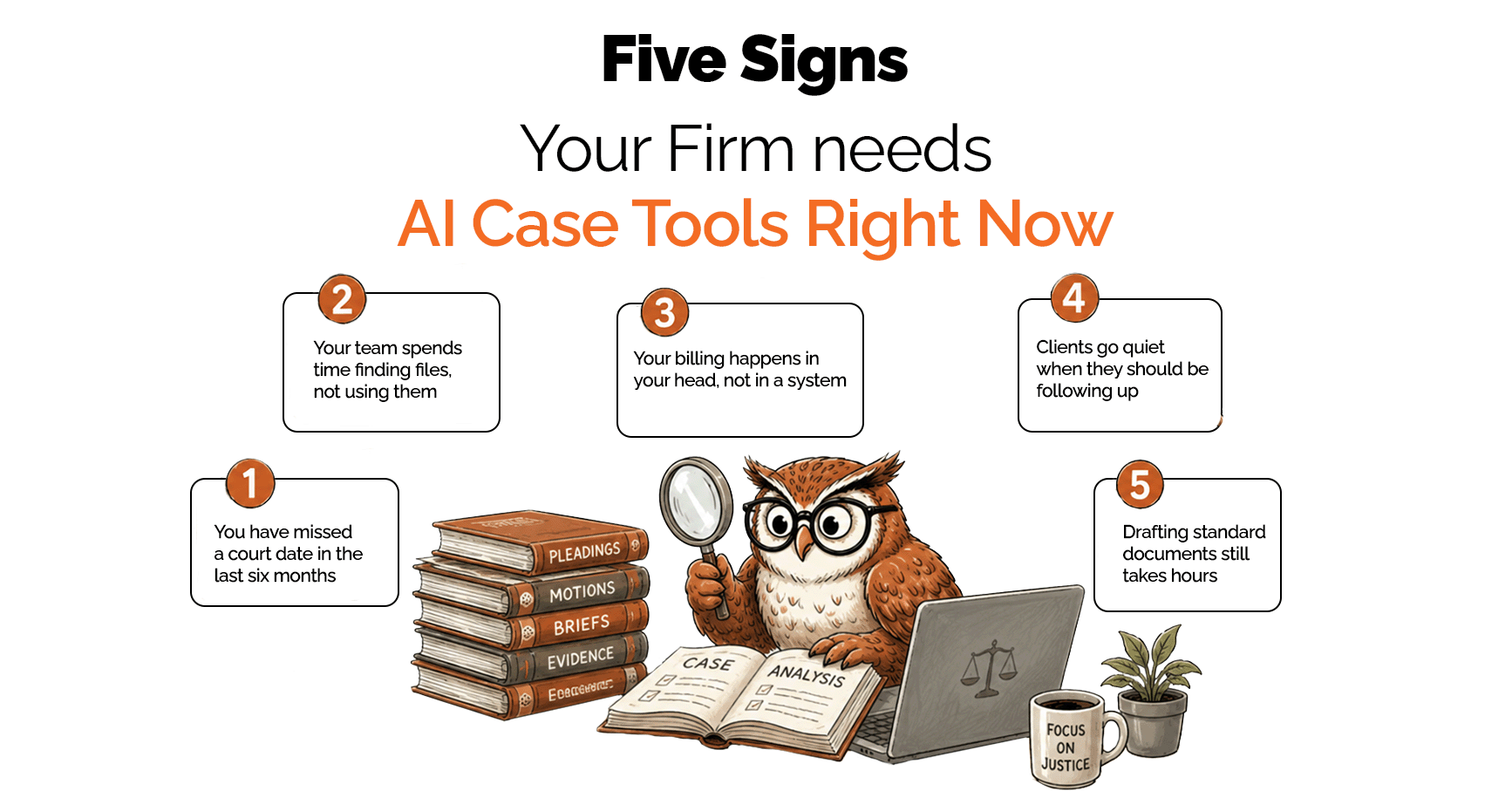
Five Signs Your Firm Needs AI Case Tools Right Now
Nobody switches software on a quiet Tuesday. It usually happens after a date gets missed, or client calls upset. Then someone finally says we can’t keep doing it like this.
The warning signs show up much earlier. Read through these five and keep counting. Two or more, AI case management software deserves a serious look.
- A hearing date nearly slipped, and no legal case tracking software caught it
Think about where your next hearing date is written right now. It’s probably in the diary, for a start. Maybe it’s also in a WhatsApp message from the client, and on that sticky note by the cabinet.
Three copies sound safe. It isn’t, because when the court moves the date, nobody updates all three.
LawVyn fixes this by keeping one copy that counts. When you schedule a hearing for a case, it appears in your calendar on Google or Microsoft services. The reminders will appear in the application and in your inbox before the time of the trial. One dashboard shows every hearing across your courts.
- Your team hunts for files that case management software for lawyers would keep in one place
“Can you send me the agreement from the Kapoor matter?” Then the digging starts in email, then a Drive folder called FINAL_v3. It ends with a phone call to whoever handled it last year.
In LawVyn, that agreement would already be sitting inside the Kapoor case. Files are sorted into ours, the opponents and the courts, and each upload gets tagged by type and matter. Search reads inside scanned orders too. Google Drive, OneDrive and Dropbox stay connected, so nothing needs re-uploading.
- Matters stall when one person is away, the gap law firm case management software fills
Here’s a quick test. If your senior associate took a week off tomorrow, could anyone pick up her matters without calling her?
For most firms, the answer is no, because case status lives in someone’s head.
LawVyn moves that knowledge out of heads and into the record. Every case tracks its stage, from filing right through to disposal. Partners can assign matters and spots who’s carrying too much. A timestamped audit trail gives whoever opens the file next to the full story.
- Clients have started chasing you, a nudge toward legal case management software for lawyers
Clients rarely complain about slow updates. They just go quiet, and one day they ask an NOC to change advocates.
A client who must chase you twice starts wondering what else is slipping.
With LawVyn, the answer to what’s happening in my case is one screen away. The stage, next date and latest documents sit together. A junior can make phone calls like a partner. The onboarding process is a systematic process for the introduction of new clients and nobody has to remember the steps involved in the process.
- Routine drafts start with a blank page that can be eliminated with the use of legal practice management platforms.
Calculate the number of legal notifications sent by your firm last year. Then intuitively count all the documents starting not from a blank page. Most follow the shape you know by heart.
LawVyn starts drafts from your own templates instead. An AI chat reads your attached files and helps shape it. Highlight a paragraph to rewrite it or check its grammar. A legal check lists possible issues for you to accept or dismiss. When the draft is ready, an approval workflow sends it to the right reviewer. If it sits too long, they get a nudge.
When the signs add up, it’s time for legal case management software
Together, these signs describe a practice held up by effort, and effort doesn’t scale. LawVyn puts cases, hearings, documents and drafts into one connected record, built for how Indian chambers work.
Upload a petition or an order, and LawVyn proposes the parties, court and dates for a new case. Each field is marked AI-suggested, and nothing saves until you’ve checked it. See the full case management feature.
FAQs
- What are the early signs a law firm needs case management software?
The usual ones are a hearing date that nearly slipped, files that take longer to find than to use, and matters that stall when one person is on leave. Clients chasing you for updates is another, and so is drafting routine notices from a blank page. If two or more of this sound familiar, it’s worth looking at AI case management software properly.
- How does LawVyn help with hearing dates?
You enter each hearing once against its case, and it syncs with your Google or Microsoft calendar. Reminders go out before the date, both in the app and by email. One dashboard shows every hearing and deadline across your courts, so nobody has to keep three copies.
- Does the AI save case details without a lawyer checking them?
No. When you create a case from an uploaded petition or order, LawVyn suggests the parties, court and dates and marks each field as AI-suggested. Nothing is saved until someone reviews it and confirms.
- What is legal case management software?
It’s software that keeps everything about a legal matter in one record: hearing dates, documents, parties, notes and who’s handling it. Instead of spreading a case across a diary, email and WhatsApp, the team works from one shared source.
- Will AI replace a lawyer’s judgment?
No, it will not. AI handles the repetitive parts, like suggesting case details, organizing files and checking drafts. The advocate still decides strategy, reviews every draft and signs off.